PTCL Vfone has announced a new “Vfone Azadi Offer” in the celebration of Independence Day for its Vfone subscribers. Subscribers of Vfone can get the free balance of Rs.100 on loading the Vfone scratch card of higher than Rs.100.This offer is valid from 29th July, 2010 till 30th August, 2010.
Terms and Conditions:
• Free balance offer will be valid for all cards of more than Rs. 100 denomination i.e. on Rs. 300, 500 and 1,000 denomination cards• Free balance can be utilized for calling on-net Vfone to Vfone, Vfone to PSTN Local and Vfone to NWD• Free balance can be utilized for Internet and SMS (on-net and off-net)• The validity of free balance will be 30 days only• Free balance offer will be applicable only for WIN subscribers & not for WIPT i.e. not for VPCO
Government Making it Obligatory for Cellular Companies to Curb Grey Traffic and Channelize Forex deals via SBP
The government is allegedly making it mandatory for the cellular companies to acquire systems to hold back grey traffic and channelization of financial transaction with foreign operations through the State Bank of Pakistan. Incoming international telephony traffic generates a financial premium over the cost of transmission and terminating such traffic into Pakistan.
According to the provisions of Telecom Deregulation Policy, approved by the Cabinet in 2003, Long Distance International (LDI) licensees would be permitted to retain a fixed share of termination charge paid by international carriers while the remaining portion of premium is to be used for infrastructure development to increase the tele-density. The latter is termed as the Access Promotion Contribution (APC).
In the existing policy management this premium for the calls terminating on local loop operators (LLOs) is passed on to LLOs while the APC on cellular termination is collected and provided to Universal Services Fund (USF), the agency responsible for escalating the infra-structure of tele-density in the country. Moreover, the policy entrusted Pakistan Telecommunication Authority (PTA) to work out a formula for revenue sharing, which would be reviewed and notified, at least, once every six months. Framework for APC was outlined in Access Promotion (AP) Rules and AP Regulation published by the PTA in 2005.
Pursuant to Deregulation Policy and AP Rules and Regulation, PTA monitors and approves the international telephone service agreements recommended by a consortium of LDI operators. From time to time, PTA has been reviewing the APC by issuance of determined rates. However, telecom industry has been agitating, for quite some time, on Approved Settlement Regime (ASR) introduced by PTA and they have expressed reservations on recent determinations issued by the PTA.
Sources said current regulatory regime does not provide the mechanism to effectively curb the menace of grey traffic, resulting in a huge financial loss to the exchequer. The matter was referred to the IT Ministry for resolution. A committee comprising representatives of the industry, PTA and MoIT was constituted to deliberate upon the issue. The committee held a series of consultative meetings, with all the stakeholders to finalise the revised policy for ASR.
Based on the consensus, worked out through the consultative process, MoIT proposes the following changes in the clause 4.3 of the Telecommunication Deregulation Policy and to make them the integral part of the next telecom policy for the sector as per following:
(i) at present, net incoming international traffic generates a financial premium over the cost of conveying and terminating the traffic into Pakistan.
(ii) for next five years a reasonable portion of the premium is proposed to be used to promote infrastructure expansion.
The design and implementation of APC programme will be guided by the following principles:
- APC shall be used to foster new infrastructure development to increase tele-density through local loop operators, mobile cellular operators and US
- Distribution of funds between all stakeholders shall be done in a transparent and non-discriminatory manner
- APC programme shall be under the regulatory supervision of PTA, which shall also regulate international traffic agreements
- In order to stabilize ASR and to eliminate the speculation in the market ASR distribution mechanism for various stakeholders should for the next five years
- Afair share in APC called APC-M may be allocated to mobile cellular operators
- Mobile cellular operators shall acquire the system to curb grey traffic on access level which will also facilitate quality of service monitoring and implementation of International Mobile Equipment Identity (IMEI) regime.
It is also being proposed that LLOs shall provide 200,000 broadband connections each year exclusively with APC amounts for next five years. Based on the percentage share in APC, the authority shall determine the obligatory connections of each operator. In order to secure the effective collection of APC, negotiations of bilateral accounting rates will be supervised by PTA. The principle of “one country one rate” will be implemented.
PTA would establish an international traffic clearing house for all incoming international traffic. Through this clearing house PTA would have statistics of all incoming and outgoing traffic including the satellite traffic. All licensees will be obliged to file reports on the volumes, sources and destinations of international incoming minutes, and PTA shall audit their itemised call records and billing systems with the objective of detecting and eliminating fraud.
Channelization of forex inflow of incoming traffic as well as monetary transactions with foreign operators would be through the State Bank of Pakistan; and six monthly account audit and stabilization of call rates will be ensured by the PTA, the sources continued.
A fund for the revitalization of local ICT/telecom equipment manufacturing through public private partnership and curbing the grey traffic under MoIT may be created with the differential amount from APC-M and APC-USF over the international mobile terminating traffic. Accounting separation will be strictly enforced for access promotion contribution received by the operators for tele-density enhancement and the same shall be audited by the PTA, biannually.
PTA would devise all possible mechanisms to protect the share of LDI operators including maintaining the “white list” and “black List” of international carriers whereby LDI operators would be allowed to terminate traffic only for those international carriers on the “white list”. International carriers observing the sanctity of the ASR of the country will be included in the white list. Whereas LDI would register written complaint with the Regulator (PTA) for non-compliance of the sanctity of the ASR and PTA shall black list those carriers and direct LDIs to stop bringing traffic from black listed carriers. Sources said LDI operators would be required to submit bank guarantees to all the recipient organizations so that the same can be encashed in case of default from LDI. PTA would issue comprehensive regulations to ensure sanctity of ASR and timely payment of outstanding amounts by all concerned.
IT Firms’ Registration Hit Record in Second Quarter
Pakistan Software House Association (PASHA) has enrolled 20 new Information Technology (IT) firms in the second quarter of 2010, showing a significant expansion over last year, when it enrolled the same number of companies in 12 months, Yusuf Jan, Chairman, PASHA, told The News on Wednesday.
“There has been a focus on entrepreneurship in the local IT industry for the last three years,” said Jan, adding “There’s a tremendous growth in new companies entering the business, especially in the second quarter.”
Yusuf Jan is also the Co-founder and Executive Vice President of Mixit Technologies, a company providing trading policy to Nasdaq and 250 brokerage houses. Pakistani IT companies such as Sofizar, Mindstorm, Jadu, Chopal, TPS, etc. have won accolades by preparing unique software, games, and Internet-based solutions for global companies.
There is about 400 IT firms in Pakistan that are members of PASHA, it employ around 150,000 professionals, leaving a small number of companies outside its domain. PASHA, formed some 10 years ago, estimates the size of the local IT industry at more than $2 billion per annum with yearly exports of around $1 billion.
Jehan Ara, President, PASHA, said in a presentation that the IT sector had become one of the most innovative and vibrant industries, progressing at a pace of 30 to 50 percent per annum. The local IT firms caters, in a variety of ways, to the financial, textile and telecom sectors’ needs. It also provides software and services to various government departments, while the defense sector is also a major user of IT products.
“The financial sector is leading the way (in terms of IT use) on the back of growth in the online and mobile banking services and ATM usage,” Jehan Ara added.
In order to get the up to date picture of the IT industry, PASHA and Pakistan Software Export Board are conducting a mutual project to analyze future challenges. “The last two-year experience has shown that the global challenges are there, so the study will be a bit different from the previous ones,” said Yusuf Jan.
“Unlike other parts of the world, Pakistan is unique as half of the companies here belong to the product development side and half to the IT services area,” Yusuf Jan said, adding that in many countries this ratio is lopsided.
There are more than 100 companies in the country and over 400,000 graduates are enrolled with them through various programmes and courses. Speaking on the educational and training side, Jan said that 25 percent of the graduates are highly skilled and getting a job has never been a problem for them.
“After three-year slump, enrollment in the universities, offering IT subjects, has gone up considerably this year,” said Yusuf Jan.
“Pay scale in the IT sector is the healthiest among the rest of the professions and every other firm is now looking for people.” A skilled IT graduate can easily earn a salary of Rs100,000 per month within the first four years of his career, he added.
source: The News
The Mysterious Air Crash
And it was all over the news this morning, I’ve been receiving different texts from my friends about the plane crash but I didnt know the case is very different. I woke up and turned on a news channel and I was astounded to know that a massive passenger plane has collided Margalla hills surrounded by Islamabad. I had no idea at that time about the massive holocaust of humanity in the name of Plane crash. By the after-noon it was evidently declared that nobody survived the plane crash, Thus killing all 152 people on board.
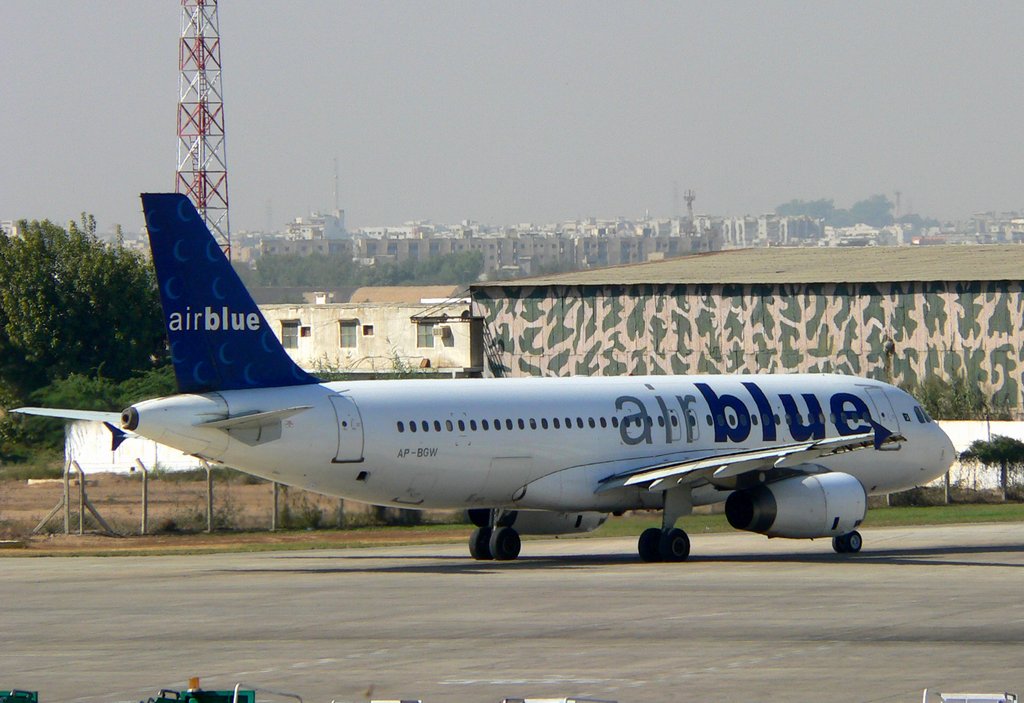
I’ve been deeply analysing the plane crash as it was for the first time that a big jet with so many passengers on board has crashed into the area where planes are not allowed to go. Beside this, so many questions are still unanswered. I’ve been thinking why the plane was directed to move towards the Blue Area side of Islamabad, as that area is usually regarded as VIP area where no plane can fly. Plus it has all important buildings of Pakistan like Supreme Court, Parliament House, Prime Minister House and the President House. This is still an unsolved mystery for me that why the plane was sent to ‘No Go Area’. Please dont forget that Naval Headquarters and PAF complex is also located in that Area.
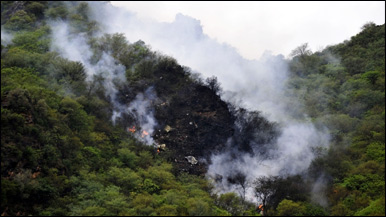
Two third of turbulence-related accidents occurs at or above 30,000 feet. Generally, flying through turbulence of the milder nature, if prolonged, can be fairly uncomfortable to the passengers. If such turbulence were detectable by the weather radar or from weather forecast, pilots would avoid them by deviating off track. There were number of air planes which experiences air crash because of Air Turbulence but they were rare in nature.
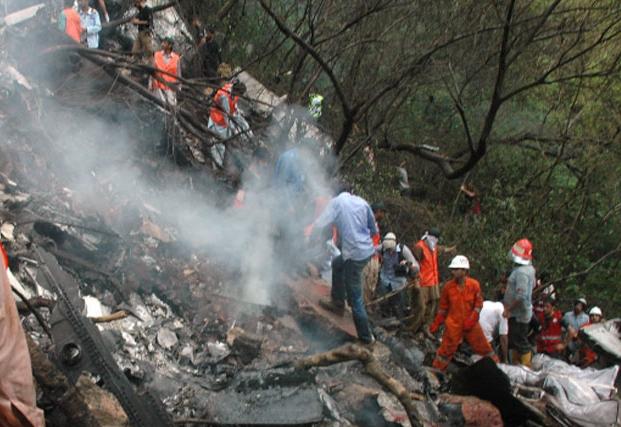
The mystery still remains unsolved and the questions are still there to answer but initial investigations has to under-go in order to fetch out the conclusion. I’ve extreme sympathy with the families of passengers who were on board. There’s nothing that can compensate human loss but yet when there is loss, it should be investigated so that no-one else in future face something like that.
Rules for Traffic between Pakistan and AJK/GB Revised
After consultation with industry, PTA has decided to route all calls between Pakistan and AJK/GB through LDI operators of both the territories.
Now all calls originating from AJK/GB and terminating on networks in Pakistan or vice versa will go through LDI operators and then the relevant landing operator.
This way, calling party will have to pay Transit Charges to the cross-area LDI operators.
PTA has devised following three scenarios, and their cost mechanisms:
- For calls originating from AJK/GB’s LL or mobile networks and terminating on fixed networks in Pakistan, the respective AJK/GB’s LL operator or mobile operator will route the call through Pakistani LDI on far-end principle and will pay PTA’s Approved Transit Charges to respective Pakistani LDI operator in addition to respective termination charges and vice versa
- For calls originating from AJK/GB’s LL or mobile networks and terminating on mobile networks in Pakistan, the respective AJK/GB’s LL or mobile operator may route the call through Pakistani LDI on far-end principle and pay PTA’s Approved Transit charges to Pakistani LDI , in addition to respective termination charges and vice versa. However, AJK/GB and Pakistani operators may also mutually agree any other traffic routing as well as charging mechanism on non-discriminatory basis.
- For incoming international traffic, an operator having LDI license in AJK/GB is allowed to bring international traffic for AJK/GB territory only (by using numbering series of AJK/GB) and not for Pakistan, same is applicable for operators having LDI license in Pakistan in similar manners. However, an LDI operator having license for both Pakistan and AJK/GB can bring traffic to Pakistan as well as AJK/GB, but through separate IPs/ ISPCs/NSPCs.
ZONG launches SMS Delivery Report at Rs10 per month
ZONG has launched SMS Delivery Report today. Keeping in line with its history of providing distinctive services, ZONG has launched the SMS Delivery Report at a very negligible price and will ensure that the subscriber always receives the report for their SMS.
It’s always important to know whether your SMS has been delivered to the recipient or not. Previously, SMS delivery was given by most operators free of cost but due to the traffic on the messaging system owing to these delivery reports, most of the times the operators would shut down the delivery report service. This would leave subscribers in the dark having no option of knowing whether it is a system glitch or their SMS has not been delivered. Currently operators are revisiting their SMS delivery report situation and developing a charged subscription service for this purpose.
This service will add to the list of value added services being provided to its customers. With this service, customers will get information in real time as soon as the SMS is delivered to the recipient and will be assured of the delivery of their SMS on the destination.
Subscription:
For subscription, subscriber can send “SUB” to 533 for activation of this service
Charges:
The charges for Delivery Report Service are Rs 10+t per month.
Express Tribune Violates Google TOS
Newly launched newspaper, Express Tribune, is apparently violating Google Terms of Services for using Google Custom Search Engine on its website.
Express Tribune uses Google Custom Search service to facilitate its readers with best possible search results; however, webmaster has apparently removed the Google branding from search box, which is not allowed by the Google TOS.

One may opine that Express Tribune is using “Google Site Search”, a paid solution for businesses that allows removal of Google branding, however, ads displayed in Search results and “Google Custom Search” logo in results confirms that website is using the free version.

A query sent to Express Tribune’s webmaster regarding this is still awaiting response.
This violation, if reported, can cost heavy to Express Tribune, as Google can ban this website forever by not displaying it in Google Search, a nightmare for any online business.
Mobilink Super Engineer Competition Concludes
Mobilink held a prize distribution ceremony at Mobilink Office Islamabad, to conclude the “Mobilink Super Engineer Competition”. The title was won by students from Ghulam Ishaq Khan Institute of Engineering Sciences and Technology.
Securing 1st position with their project, “Traffic Analysis and measurement system in IPMPLS Environment” the 5-member team from GIKI was thrilled. The team representing NUST University took the 2nd position, with their project, “Inter-city video conferencing system” while the 3rd position was taken by the team from FAST University with their project, “Automation of physical distribution of E 1s”.
An inter-university contest involving teams of students from the leading engineering universities of Pakistan, Mobilink Super Engineer Competition provides the students the chance to work on a real life project with technical experts from Mobilink’s team. The projects were evaluated by a senior Mobilink jury having representation from different Technical departments against a pre- defined criterion of innovation and creativity, project presentation, meeting the timelines and meeting project objectives.
Rashid Khan, President & CEO Mobilink, awarded the teams with shields and certificates in the presentation ceremony held at the Mobilink head office. He appreciated the efforts of the participating teams and assured the winning team of opportunity of employment assessment within the Technical division at Mobilink.
Khan shared, “Mobilink believes in nurturing the intelligence of progressive youth and innovators of our nation. We recognize this as a very hands-on field and this is why the Super Engineer Competition was packaged as a project based drive. We were confident that with adequate support, our youth can indigenously develop modern technologies and truly innovative systems. The outcome of the participating teams has confirmed that.”
Thanking Mobilink’s Technical team for their support, Hafiz Zeeshan from the winning GIKI team shared, “This was a true test of what we had learned. Having the chance to work with experts in the field and being recognized for it has given us a renewed confidence in our ability. We will never forget this experience and opportunity.”
In addition to mentor programs, Mobilink also provides grants at Bachelor and Masters level for students of LUMS and GIKI. Mobilink also launched an innovative SMS Literacy project for rural women in partnership with UNESCO to improve the reading and writing skills of semi-literate women using cellular technology.
PTA and Nust Sign MoU
Islamabad: Pakistan Telecommunication Authority (PTA) and National University of Science and Technology (NUST) have signed a Memorandum of Understanding (MoU) to enhance mutual cooperation for research in the relevant field and to promote mutually beneficial relations between the two organisations. Chairman PTA Dr. Mohammad Yaseen and Rector NUST Lt. Gen. Muhammad Asghar signed the MoU in a ceremony held at NUST Headquarters Islamabad today. This MoU would be valid for (five) 5 years and would be renewed after completion of the five year period.
It is anticipated that this collaboration would allow the academia to share its research in the field of telecom, for its appropriate utilization by the regulator and other organizations. Main objectives of this collaboration are to support research activities and to equip the future leadership with theoretical training as well as practical experience in policy and regulatory issues of telecom sector.
On this occasion, Chairman PTA Dr.Mohammed Yaseen said that PTA would provide telecom information and expertise to NUST, reciprocally NUST would encourage its students to undertake research in different areas of telecom sector. He said that under the MoU, PTA would help NUST in identification of research areas. Similarly NUST would cooperate with PTA on different issues related to trade, business and economy. It may be pertinent to mention here that PTA has always been working towards encouraging research activities in telecom sector. PTA being an academia friendly organization has taken number of initiatives to establish strong linkages between the educational institutions and PTA for the promotion of telecom research.
The research on forthcoming regulatory issues and challenges and transfer of new technologies in local sector is likely to assist the regulator and the policy makers. To this end PTA has taken significant steps that have received an exhilarating response from all the stakeholders. These initiatives include SMS-based Information System for educational institutions, PTA Gold Medal Scheme, Essay Competition on Telecom Day and cash prizes for best research project competition. PTA has awarded the gold medals to the winning students for academic year 2008 and 2009.
EasyPaisa Gets an Urdu Website
Easypaisa, the mobile banking solution from Telenor and Tameer bank has launched Urdu version of its website, with almost similar details as they are available in English version.
It looks that Urdu version is machine translation (or what they call meaning to meaning translation) of Easypaisa’s English version; check following paragraph (available here) and its translations in quite literary manner (available here):
Telenor Pakistan has always been a pioneer in innovative services. For easypaisa, Telenor Pakistan has partnered with Tameer Micro Finance Bank to introduce branchless banking for the first time in Pakistan. The innovative product umbrella of easypaisa will give you complete convenience and empowerment that you have always wanted in life.
Translation:
ٹیلی نار پاکستان ہمیشہ سے اختراعی سروسز کا بانی رہا ہے۔ ایزی پیسہ کے لئے ٹیلی نار پاکستان نے تعمیر مائیکروفنانس بینک کے ساتھ شراکت دار کی ہے تا کہ پاکستان میں پہلی بار برانچ لیس بینکنگ کو متعارف کرائے۔ایزی پسیہ کی چھتری کی اختراع پروڈکٹ آپ کو مکمل سکون و اختیار دے گی جو آپ اپنی زندگی میں چاہتے ہیں۔
Even Google translated this paragraph better with easy-to-understand language.
Nevertheless, a good step, with lots of chances for betterment; particularly if payment sending methods are explained in easy to understand language with more details than what they are available in English.
Subscribe to:
Posts (Atom)